Publications /

Clean Water through Savings and Credit Cooperatives in Colombia


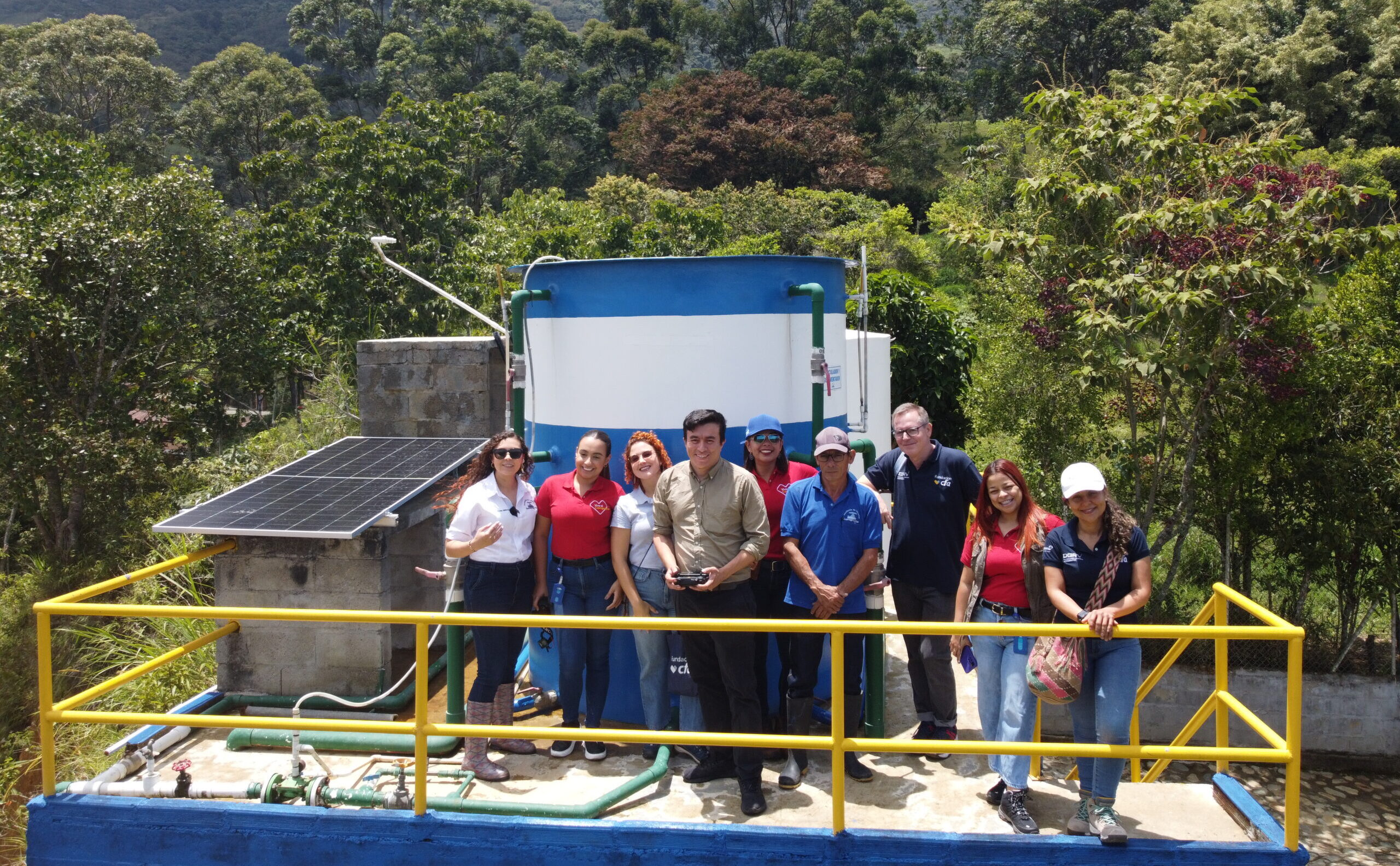
In Colombia, the Juan Cojo–Cuchillas water utility has achieved a major milestone: a significant improvement in the quality of drinking water. The utility is based in the municipality of Girardota and supplies water to around 5,000 people in rural areas. 

Within the framework of the LAC E-Coop project, coordinated by DGRV and co-financed by the Inter-American Development Bank (IDB) and IDB Lab, the utility accessed a green loan from the Savings and Credit Cooperative (SACCO) CFA. This financing made it possible to implement a solar energy system to optimize Juan Cojo-Cuchillas’ water treatment process. 

Electrification in Rural Areas of Colombia


In Colombia, there are still vast rural areas where access to energy is limited or the quality of service is deficient. In this context, solarbased solutions are key to ensuring basic services such as safe drinking water. In addition, they help reduce energy costs. 

Especially in the field of water supply, automation through the integration of solar systems represents a significant advancement. Prior to the project, the dosing of chemicals for the water treatment process at the Juan Cojo–Cuchillas utility was carried out manually. This involved risks and inconsistencies in water quality. With automation, the process is now more precise and consistent. It improves the quality of water for human consumption and increases the system’s operational efficiency. 

How does DGRV support cooperative partners on the ground?


Cooperatives play a key role in financial inclusion, especially in rural areas. Access to financial services is often limited and cooperatives have close ties to communities and an understanding of local dynamics. They are able to offer products tailored to local needs and facilitate access to financing. They can support initiatives that improve quality of life and promote sustainable development. 

In this context, DGRV works with cooperatives to foster their potential as strategic actors in driving economic and social development through the cooperative model. Through technical assistance and institutional strengthening, DGRV supports cooperatives in developing capacities, tools, and financial products. Like this, DGRV enables them to respond to emerging challenges such as energy transition and green finance. 

As part of this work in Colombia, on the one hand, DGRV supports the SACCO CFA in the development of its Environmental and Social Risk Management System (SARAS). This instrument enables CFA to assess and manage the environmental and social risks associated with its green portfolio. CFA has voluntarily introduced the system, even though current legislation in Colombia does not yet require it. However, as upcoming cooperative regulations are expected to mandate such systems, this step ensures the institution is well prepared. 

On the other hand, the Juan Cojo–Cuchillas water utility association also receives sociobusiness support under DGRV’s “Redes” (network) methodology, strengthening its organizational management and sustainability. This support is based on a comprehensive assessment of the organization and the implementation of a tailored strengthening plan adapted to its needs.  

The Juan Cojo-Cuchillas case clearly demonstrates the potential of the cooperative model: to drive real change in rural communities by combining renewable energy financing with strong institutional support. It shows how these approaches can address concrete challenges while expanding financial inclusion, improving access to essential services, and ultimately strengthening living conditions on the ground. 
The following publications may also be of interest to you


Project Story

Transforming Cooperative Support: Building Capacity for Sustainable Cooperatives in Vinh Long

2. March 2026
A decade of capacity building in Vietnam transformed cooperative support from administrative oversight into strategic guidance, helping cooperatives become sustainable, transparent, and member-driven enterprises. 

More
Project Story

From Waste to Green Fields in Brazil

2. February 2026
In the Brazilian Amazon region of Carajás, in the state of Pará, the Central Cooperative CUIA is turning fruit juice production waste into organic fertilizer. This innovative approach transforms what was once an environmental burden into a valuable resource for farmers. By doing so, it promotes a shift toward ecological farming, lowers production costs, boosts […]

More
Project Story

Strengthening Cooperative Supervision in the Dominican Republic: A Digital Leap Forward with IDECOOP

2. December 2025
In the Dominican Republic, savings and credit cooperatives (SACCOs) are a cornerstone of financial inclusion. Especially in rural areas, they are often the only financial institutions that people can rely on for saving, for borrowing — for building a better future. Protecting the savings of thousands of members and ensuring that these cooperatives are managed […]

More