Publications /

Strengthening Supervision of Village Banks through Cooperative Organisation in Laos


Strong savings and credit unions are helping to build a more resilient and inclusive financial sector in Laos. Discover how DGRV, together with the Bank of the Lao PDR and LASCU, is strengthening the supervision of village banks through cooperative solutions.

Strengthening Supervision of Village Banks


In the mountainous north of Laos, village banks play an important role in providing financial services close to their communities. They enable members to save, access credit, and manage financial needs locally. Yet as these structures grow, so does the need for reliable supervision.

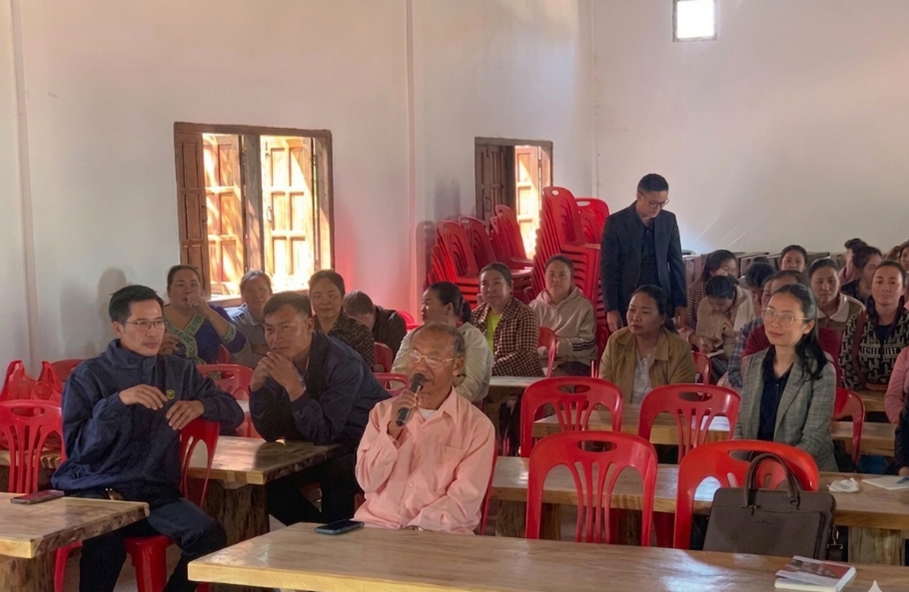
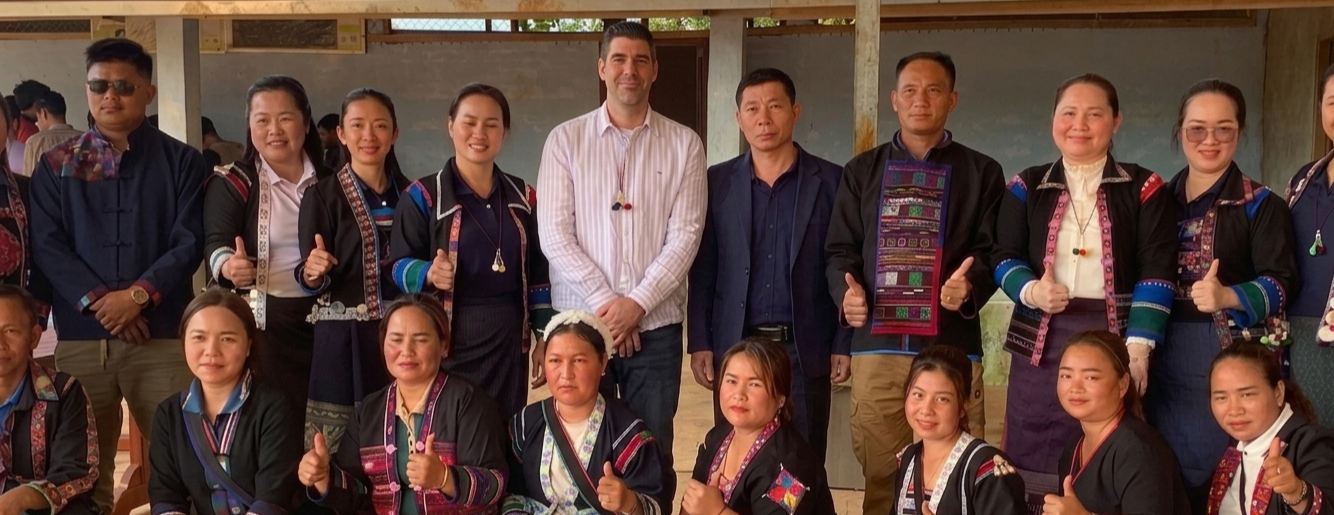
This was the focus of a joint mission to Luang Namtha in March 2026. Representatives of DGRV, the Bank of the Lao PDR (BoL), and the Lao Association of Savings and Credit Unions (LASCU) came together to explore how cooperatives can help supervise a large network of village banks.

At the heart of the mission was a practical challenge: how can more than 200 village banks be effectively supported, monitored, and supervised without weakening their local character?

The answer lies in the role of savings and credit unions (SCUs). Supported by funding from the German Federal Ministry for Economic Cooperation and Development (BMZ), DGRV works closely with BoL to strengthen SCUs in their establishment and further institutional development. This contributes to a financial sector that is accessible, stable, and resilient.

Today, Laos has 34 registered SCUs alongside other microfinance institutions. While many SCUs directly serve individual members, some also act as umbrella organisations for village banks. In this role, they provide financial management, reporting systems, refinancing, and organisational support. They therefore form an important link between local village banks and the broader supervisory framework.

A strong example from Luang Namtha


What this looks like in practice became clear during a visit to SCU Homxap Phadthana in Luang Namtha in northern Laos.

Here, the numbers are striking: the SCU works with 206 affiliated village banks, covering more than half of all villages across five districts. With over 38,000 members and almost all of the village banks operating profitably, the network demonstrates both outreach and effectiveness.

Yet these numbers also point to a challenge: how can such a large and decentralised system be reliably supervised?

The model itself offers part of the answer. Responsibilities are clearly divided. Village banks operate at the community level, managing savings and lending directly with their members while the SCU provides refinancing, defines procedures and reporting standards, and delivers technical support.

As Mr. Sangkhy VONGSANITH, Manager of Homxap Phadthana SCU, explains:

“Village banks remain independent and close to their members, but through the SCU, they gain access to technical support, financial management, and a framework that helps them operate sustainably.”

Together, this creates a system that combines local proximity with central oversight.  This approach links access to financial services with structured control of liquidity, risks, and data.
From fragmented structures to a functioning system


One key insight emerged from the mission: effective supervision in Laos cannot focus solely on individual institutions.

Mr. Visone SAYSONGKHAM, Director General of the Non-Bank Financial Institution Supervision Department, emphasizes:
“Effective supervision in Laos cannot rely only on direct oversight by the central bank. Strong cooperative structures, especially savings and credit unions, are essential partners in ensuring that village banks operate safely and transparently.”

Instead, it depends on a system in which each level plays its role.

Strong SCUs are essential. This is not only the case for supporting village banks, but to organise and supervise the entire network.

These insights are now feeding into the ongoing development of the SCU regulatory framework. Clear roles between BoL, SCUs, and LASCU, combined with reliable reporting and control mechanisms, will be crucial for strengthening the sector.

Building long-term financial inclusion


The experience from Laos highlights an important point: financial inclusion is about more than access to services. It requires strong institutions, functioning systems, and cooperative principles put into practice.

Only when local structures are empowered and connected to effective oversight can financial systems become both inclusive and sustainable. This is exactly at the core of DGRV’s approach in cooperative support worldwide.