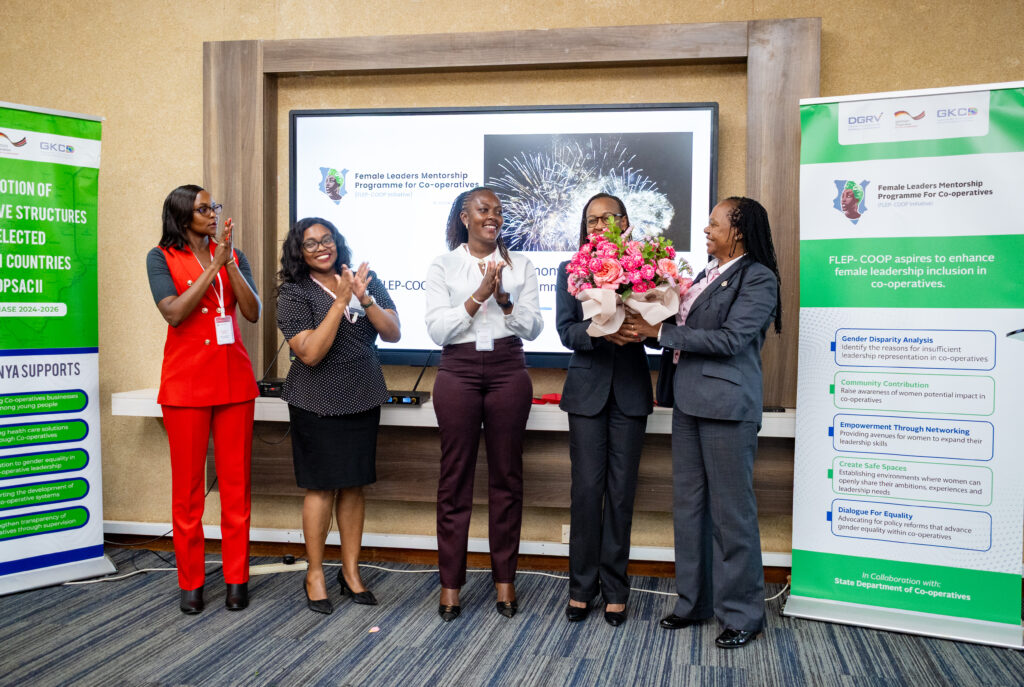
Twelve women in Kenya’s cooperative sector transformed their leadership potential through mentorship, creating ripple effects in their communities.
In Kenya, a 15-month mentorship journey empowered twelve women to take on leadership roles and inspire change in their cooperatives.
What happens when women who aspire to lead in cooperatives are given the right support, mentorship, and network?
In Kenya’s cooperative sector, the answer can be seen in the first cohort of FLEP-COOP, a tailored mentorship programme for aspiring female leaders. Twelve women between the ages of 24 and 38 recently completed a journey of fifteen-month of personal development in a group. Their transformation has been remarkable.
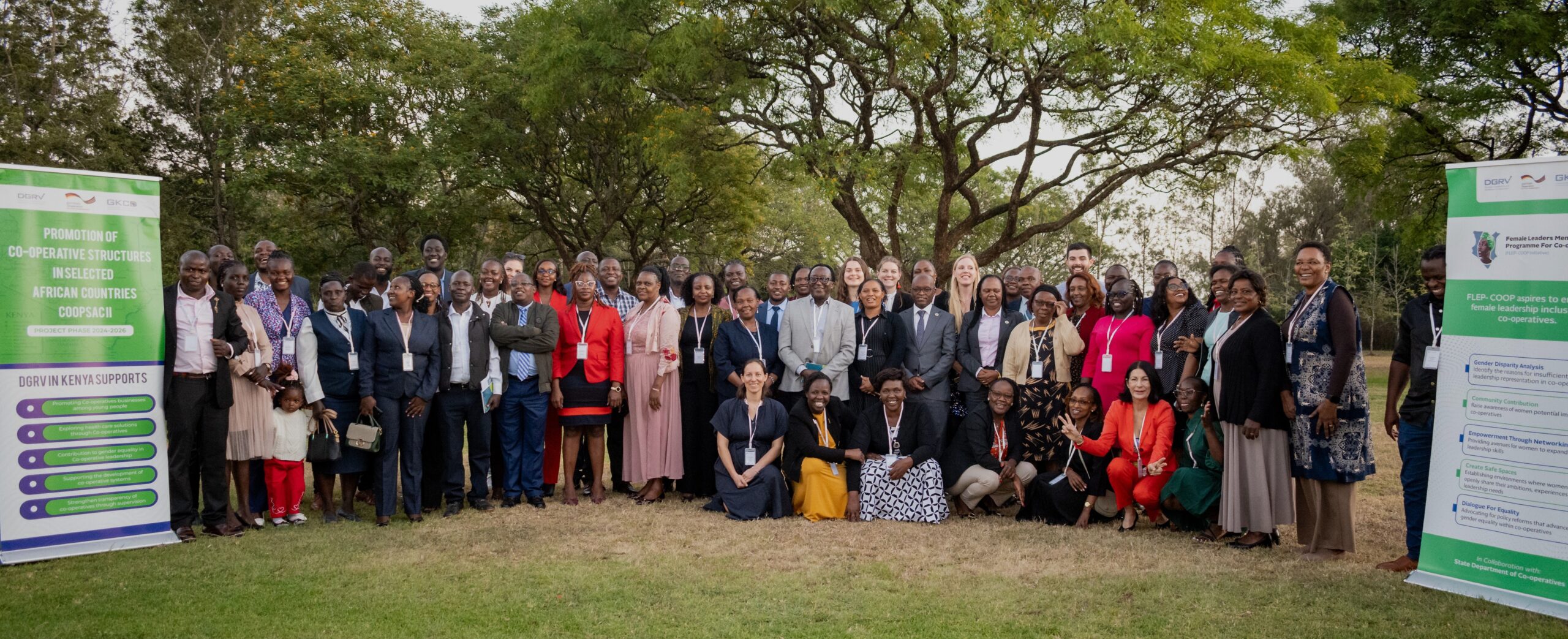
The programme was initiated and implemented by DGRV Kenya in cooperation with the Kenyan State Department of Cooperatives. Guided by four dedicated mentors and supported by nearly thirty additional national and international contributors from seven countries around the world, the mentees strengthened their leadership skills, confidence, and professional networks.
Over the course, the participants took part in mentoring sessions, individual assignments, peer-learning exchanges and digital learning formats. The programme connects experienced leaders from the cooperative sector with aspiring female leaders, creating a space for knowledge sharing, professional development and mutual support.
FLEP-COOP is rooted in the reality that less than 10 percent of female cooperative members in Kenya reach top leadership positions. Leadership roles remain predominantly occupied by men, which does not reflect the demographics of the communities in which cooperative organisations operate. This imbalance often discourages women from engaging in leadership spaces within their cooperatives.
The programme therefore sets out to understand why women’s participation in leadership remains so limited. Based on these insights, the DGRV programme FLEP-COOP offered targeted mentorship to a selected group of women, strengthening their abilities, skills and confidence to take up leadership roles within their cooperative societies.
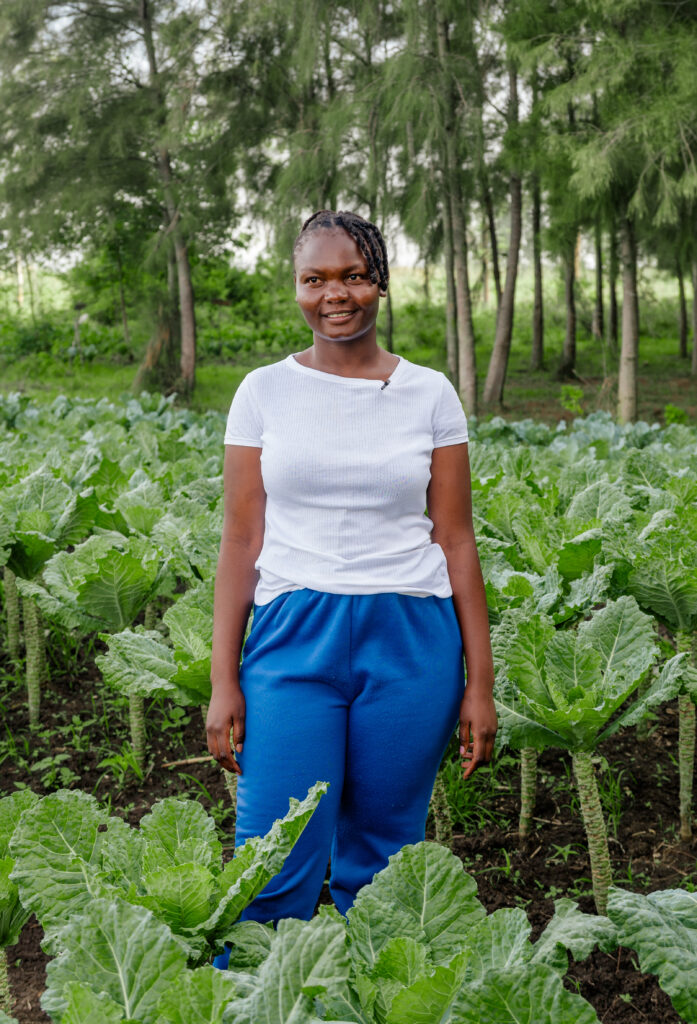
Christine overseeing harvesting
Christine, a 28-year-old mother from Homa Bay, works both in the cooperative and the hospital of her local community. Through the encouragement and support she received during the mentorship programme, she was able to inspire other women around her.
Before joining the programme, Christine was the only female ward leader in her cooperative. Today, thanks to her motivation and guidance, four additional women have stepped into similar leadership roles. Her story shows how empowering one woman can create a ripple effect that encourages others to become active and visible within their organisations.
Another mentee, Joan, 29, from Nandi County, joined FLEP-COOP with strong professional skills but little confidence in speaking publicly. At the beginning of the programme, she found it difficult to take up visible roles in her cooperative despite her capabilities.

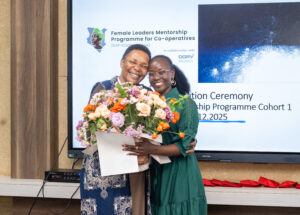
Joan graduating with mentor Daphne
Fifteen months later, Joan’s role has changed significantly. She now runs training programmes within her cooperative and coaches other women in chicken rearing and husbandry. Through the mentorship programme, she developed the confidence to share her knowledge and actively contribute to her cooperative community.
Sarah, 38, comes from a SACCO in Nairobi where the board of directors is gender balanced and many managers are female. Despite this environment, she often felt she did not belong and remained silent when witnessing problems at work. During the programme, Sarah was mentored by Diana, who at the time served as the Cooperative Minister of Nyeri County before moving on to the national government.
With the support of her mentor and other programme contributors, Sarah grew both professionally and personally. On the day of her FLEP-COOP graduation, she reflected on this journey:
“I will continue to strive to do the very best for the Sacco at each turn, lending my voice to matters as they are being discussed and addressed. This is with the view of turning the tides at the Sacco, which has been struggling for a while now.”

Sarah with her Mentor and fellow Mentees on Graduation Day
The experiences of the first FLEP-COOP cohort demonstrate how mentorship can unlock leadership potential and strengthen women’s participation in cooperative governance. As the mentees grow in confidence and visibility, they also become role models for other women within their communities and organisations.
Through initiatives like FLEP-COOP, DGRV Kenya contributes to building more inclusive, resilient and forward-looking cooperatives that better reflect the diversity of their members and create opportunities for future generations of women leaders.
reach. The goal remains clear: drive job creation, reduce poverty, and safeguard South Africa’s food sector for the long term.
The full impact story of the FLEP-COOP pilot Cohort can be viewed here:

During the International Year of Cooperatives 2025, cooperation among cooperatives moved from principle to practice. A multi-stakeholder exchange in Southern Africa illustrated how long-term dialogue, trust-based partnerships, and shared values translate cooperative ideas into sustainable, people-centred impact.
MorePretoria – Ten years ago, South Africa’s food safety and bakery sector gained an unlikely champion. What began as a DGRV division to help struggling bakeries has grown into the Bakery & Food Technology Incubator of South Africa (BICSA) – the country’s only dedicated food technology incubator, now marking a decade of formal operation.
MoreA milestone for the cooperative sector in the Philippines: CDA and DGRV advance risk-based supervision with strong support from BMZ.
More