In Mozambique we support primary cooperatives in different parts of the country and different value chains to be economically successful and sustainable.
On a secondary and tertiary level, we are fostering exchange among cooperatives and explore the possibilities and benefits of formalized structures which create a benefit for members of primary cooperatives.
An extremely unequal distribution of income and wealth and widespread poverty are among the most pressing problems of Mozambique. For more than ten years we have supported the cooperative sector in the country as part of our regional project in Southern Africa financed by BMZ so it can be a vehicle for economic and social participation.
We support reference Coops to improve their economic, social and environmental sustainability and will enable them to seize the opportunities of digitalization. A start up competition allows young people to discover and utilize the benefits of cooperation. The development of the still young cooperative financial sector in the country is a third pillar of the project.
Fostering exchange and cooperation among cooperatives to allow the sector to build a conducive ecosystem for its members is a further important part of the project.
Government partners on the national and provincial level are supported to gear the implementation of their new program for the promotion of cooperatives towards the needs of the sector. We work with secondary schools and universities to integrate cooperative content into the country’s education system.
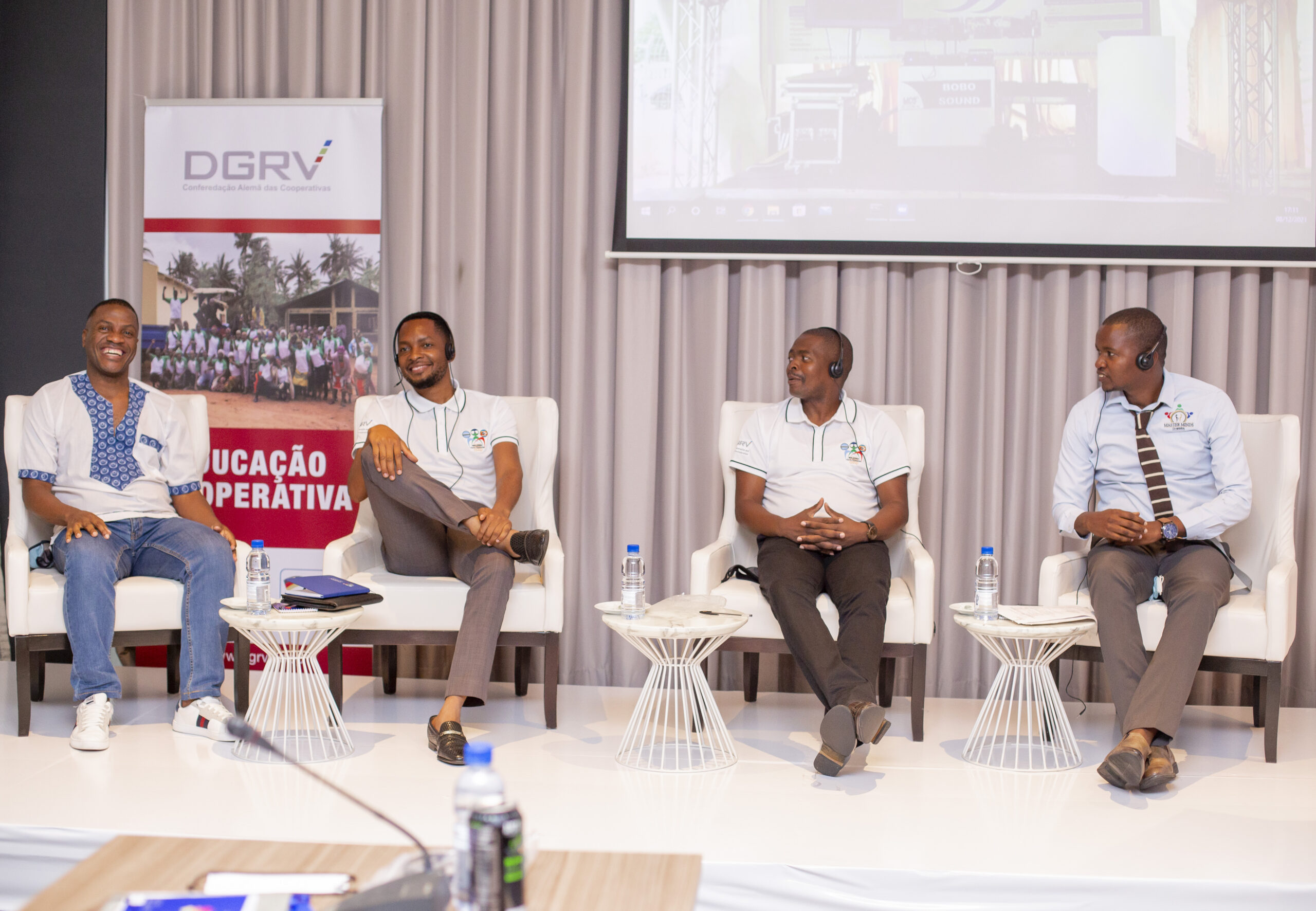
Veit H. Gesenhues
Fidel Joao
David Monjane
Head of Administration
Tânia Mambo
Priscilla Zibia

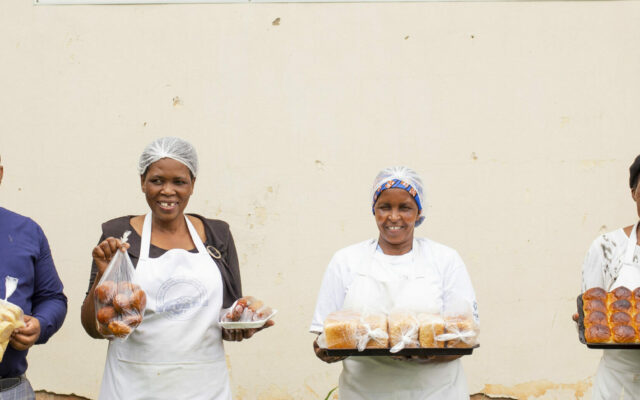
MIRUKU COOP is a service cooperative in the province of Nampula, northern Mozambique, supports the improvement of small, emerging farmers and cooperatives in the identification of business opportunities, market linkage and cooperative management.
MpC is a Mozambican non-governmental organisation that emerged from a citizens’ movement and promotes the leadership role of young people in measures for the social transformation of the country.
INIR – Instituto Nacional de Irrigação
 INIR is the national institute for irrigation under the Ministry of Agriculture and Rural Development. It is responsible for the construction and sustainable management of irrigation systems and supports farmers in irrigation management and crop production.
UCM – Universidade Católica de Moçambique
 UCM – The Catholic University of Mozambique is a private university that is present in all provinces of Mozambique and covers teaching areas such as natural sciences, engineering and social sciences.
IAR – Instituto Agrario de Ribaue
Das IAR Ribaue Agrarian Institute ist eine technische und berufsbildende Schule in Nampula (im Norden von Mosambik), die sich auf den Unterricht in landwirtschaftlichen Fächern konzentriert.
UEM – Universidade Eduardo Mondlane
 The Eduardo Mondlane University is a public higher education institution in Mozambique. It is the oldest university in the country and enjoys an excellent reputation. The UEM covers most of the country’s teaching areas in natural sciences, engineering, technology and humanities.
DGRV House
175 Lunnon Road
0083 Hillcrest
Pretoria
South Africa
 África
 In the small landlocked country of Eswatini we work with a well-established and prosperous cooperative sector which we supported and accompanied in the last couple of years to establish the National Cooperative Federation of Eswatini (NCFE) recognized by the government as the only Apex-body of the entire sector. DGRV is and will support the NCFE […]
Mas África
 DGRV supports the Kenyan co-operative movement since more than 10 years by offering technical capacities through advisory services, training, and education programs to our Kenyan project partners. DGRV’s local office in Nairobi is operationalized through our local NGO ‘‘German Kenyan Cooperative Development’’. We are promoting a sustainable, inclusive, and innovative development of co-operative landscape. Besides […]
Mas África
 South Africa is part of the regional project Southern Africa (SUCOSA II). The aim is to strengthen the economic participation of all through cooperatives. The focus is on needs-based coordinated support from government agencies, cooperative education and an organization of the sector supported by primary cooperatives. The Project Cooperatives are an important tool in South […]
Mas